
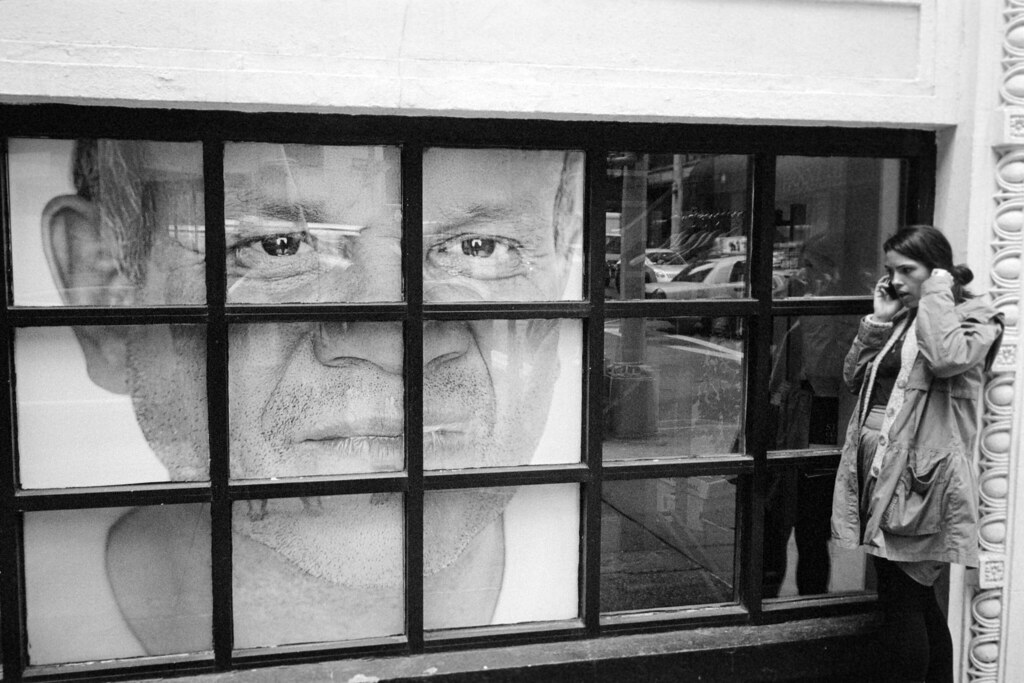
Chinatown, New York City. Black Slim Devil, Tri-X, Diafine.
Once in a while, a new tool comes along that changes the way I work and potentially improves my photography. Sometimes it’s a piece of equipment that gives me a shortcut, like the Leica M handgrip that lets me take my camera out of my bag a second sooner and stabilize the camera better. But today it was a $30 point-and-shoot camera.
I’ve been recently afflicted with an acute case of tendinitis (also known as tendonitis) in my right wrist. I think I slept on it funny one night, because I woke up with a situation where a certain range of motion caused searing, knock-the-wind-out-of-me pain. I’ve dealt with another repetitive stress injury before, and I “fixed” it by changing the way I sat at, and typed on, my computers. But this bout has been incorrigible. After some temporary progress with my physician, who also treated my homeopathically, I went to a favorite back-room acupuncturist in NYC’s Chinatown (I actually went to the wrong acupuncturist, but that’s another story for another time).
Part of the immediate problem caused by my tendinitis is that I find it difficult to hold my Leica in such a way that I can easily advance the film. The position of my right hand, cradling the camera, with my thumb between the body and the rewind lever, causes pain. So the thought of going to Chinatown on the weekend without being able to “safely” use my camera to document my trip was heartbreaking. I thought through my options for cameras that wouldn’t require me to wind with my right hand: Leica C3 (my glove box camera); Yashica T4 (currently not working correctly); and anything digital. Then I stumbled over my Black Slim Devil, a copy of the Vivitar Ultra Wide & Slim point-and-shoot. I’d only shot a couple of rolls with it since buying it because I’m not a big fan of point-and-shoots and toy cameras. This is a $30 camera with one shutter speed and one aperture setting. But the film wind is executed with the left thumb–ideal!
I already had the camera loaded with Fomapan 100 and walked to the subway, shooting as I went. I quickly spent that roll and reloaded the camera with some bulk-loaded Tri-X–my most flexible black and white film, especially when developed with Diafine, my favorite developer. I figured I would able to shoot at the set aperture/shutter speed within a relatively wide latitude of lighting conditions.
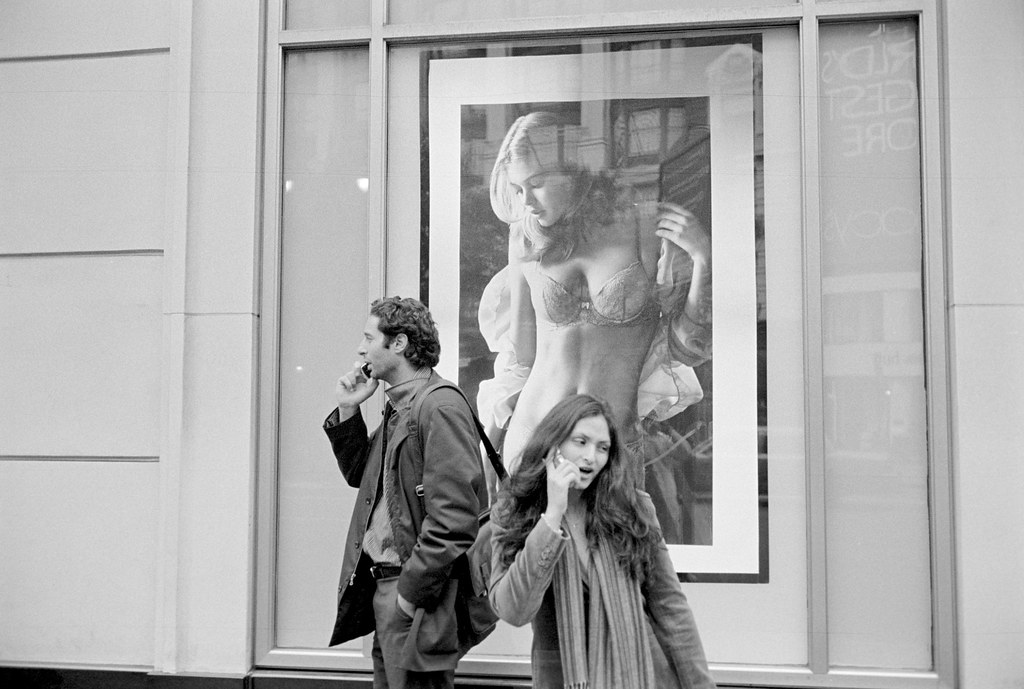
This freedom brought me much closer to my subjects and had me taking shots that I would usually be pretty hesitant about with my usual kit–a Leica MP with a 35mm Summicron version IV. There’s no focus to worry about. The only controls are shoot and wind. Because the shutter’s so simple, it’s extremely quiet–more like a leaf shutter, or more accurately, like a disposable camera. Just a quiet, plasticky click, followed by a bzzt-bzzt-bzzt wind. I got right on top of my subjects, and in the Chinatown crowds, no one noticed a thing.
I was surrounded, literally, by tourists with their Canon and Nikon DSLRs. They either kept their distance and took advantage of kit zoom lenses to get into the action from afar, or they got close and held their cameras “inconspicuously” (I use the quotation marks because there’s nothing inconspicuous about the red and black or yellow and black camera straps and noisy shutters) from the hip and shot off several or more frames at a time. I’m sure many of these folks got some great shots of the fishmonger stalls, street vendors, and the like.
But I felt liberated. The freedom from making any decisions whatsoever about shutter speed, aperture, and focus let me concentrate on framing the subject and making my timing decision. I got in close and took some chances.
While the results were mixed, I think it pushed me forward as a street photographer. I’m no Bruce Gilden. I’m terrified that I’m going to get in someone’s face for a shot and get punched in return. But this simple camera let me do just that, and no one noticed or minded.

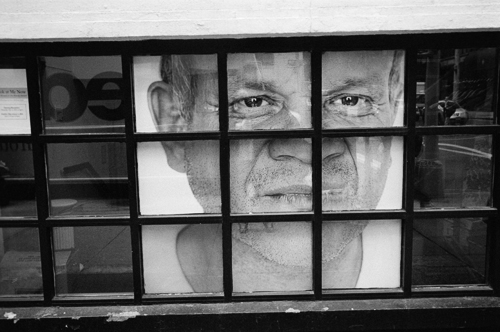
The acupuncture. Black Slim Devil, Tri-X, Diafine.
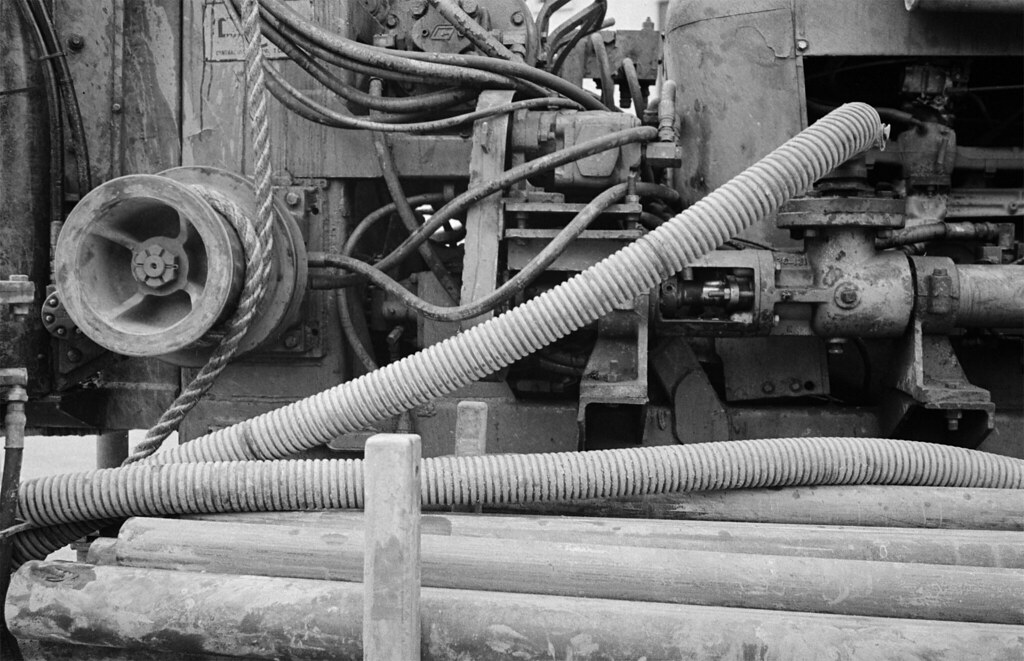
My wrist feels a lot better, and I have at least one, if not several more, acupuncture visits to clear up the tendinitis. But I’ve learned that I can get in close and thoughtfully compose a shot without reprisals. More importantly, my results show me that I’m going to want to get in close even if there is the occasional reprisal. The quality of the plastic Black Slim Devil lens is not on par with most any glass lens, especially that which I shoot with on my Leica, but the quality of my composition was much, much better.
For those of you who shoot from the hip (which I do occasionally, too), remember that you’re never going to improve as a photographer without composing in the viewfinder. It’s more conspicuous to have a camera to your face when you shoot, but it’s a matter of control. In my very personal and subjective opinion, it’s more satisfying to choose from 36 thoughtfully-composed frames than it is 200 un-composed, shot-from-the-hip digital captures.



 David Shoots Film