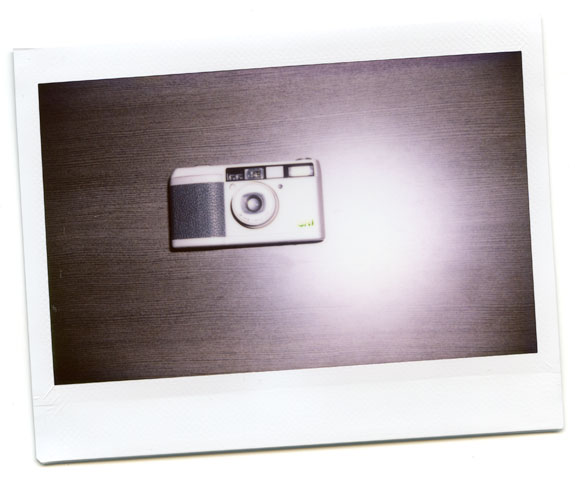
This Week’s Model – Ricoh GR1 (the ultimate point-and-shoot?)

GR1_Instax-210

The very handy Ricoh GR1, taken with a Fujifilm Instax 210.

I’m a heavy manual camera guy, but I’ve always admired and been envious of the point-and-shoots. Crisp black-and-whites taken on the fly without the need for a hunk of brass strapped around the neck. A throw-it-in-your pocket camera that doesn’t scream “steal me, I’m a vintage rangefinder.” A quiet, unassuming street shooter. Read more…

Plus-X @ 100 stand developed in Rodinal

Neima_plus-x_rodinalChevy Chase, MD

Part of the reason I blog here sporadically is because I get going on a certain style of shooting and developing and feel like I don’t have a lot of new information to share. In recent times, it’s been shooting Tri-X at 1200 – 1600 and developing it in HC-110 dilution B for 16 minutes. Just the other night, though, I decided to deal with some unfortunate rolls that had not been labeled. I had not followed my own good developing habits. Read more…

Polaroid Big Shot / Fujifilm FP-100C

Polaroid Big Shot / Fujifilm FP-100C

I used to take a ton of portraits with the Polaroid Big Shot and Polaroid Type 667 color film. I burned through most of my stash of 667 two years ago with my photo-a-day project of my son, and I just sold my few remaining packs.
What I had never done was use the camera with FP-100C, which is still available. Well, what a difference using fresh film makes! While I loved the color shifts and instant flashback look of expired 667, FP-100C makes this camera, with its fixed focus/aperture/shutter and plastic lens, into something impressive.
I’m now using it more often. I still have quite a few flash cubes left over from the photo-a-day project, so I’m going to have fun with this.

Photo of the day


Buzz, owner and operator of Buzz-A-Rama, the last slot car track in Brooklyn. Shot with a Leica M4 and Canon 50mm 1.4 LTM on Tri-X (Arista Premium 400), developed in HC-110 dilution B for 16 minutes. Metered for EI 1600.

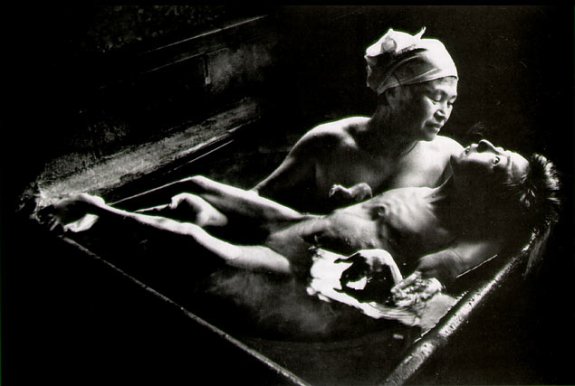
Newly surfaced interview with W. Eugene Smith in The New York Times

© The Heirs of W. Eugene Smith

© The Heirs of W. Eugene Smith

“The goal is the work itself.”

http://lens.blogs.nytimes.com/2013/01/03/w-eugene-smith-i-didnt-write-the-rules-why-should-i-follow-them/?ref=global-home


Developing Good Habits

I’ve learned a lot in the last decade of my (almost) daily photography practice, and I have to constantly remind myself to use what I’ve learned until it becomes habit. In no particular order, I’d like to share some of these habits—please share yours in the comments.

2012-365

1) Keep a film journal

Keeping a film journal is really easy (or as complicated as you’d like to make it). The three main reasons I keep one are to remember the technical details of how I shot the film, especially film speed; what I shot—event, location, etc.; and when I shot it. I start an entry when I start a roll of film.
Read more…

Photo of the day

Tri-X (Arista Premium 400) exposed for 1600, developed in HC-110 dilution B, taken with a Leica M4 and 35mm Summicron version 4.

American Museum of Natural History III: Tri-X @ 1600

For those of you who follow this blog, yes, I do have a membership to the museum, and I want to tell you how much fun it is to shoot there. Read more…

Photo of the day

Yashica T4D with date function disabled, Arista Premium 400 film (Tri-X) hacked to ISO800, developed in Rodinal 1+50, 16.5 minutes.

Let it go dark

One of my biggest mental barriers in photography is losing shadow detail. I generally follow the maxim “expose for shadow detail, process for the highlights.” But as in the rest of my life, I find it difficult to throw things away. I mean, I HAVE that shadow detail right now! It’s in the negative! Why would I print (or publish digitally) and intentionally throw that away? Let me tell myself: 1) because I can always get it back (the negative still exists), and 2) because it looks better, stupid.

If you have the same problem as me, do yourself a favor and find a print from years ago that goes dark, like the one above. Find a photograph with nice inky blacks. Now tell yourself what exactly it is that you’re missing. Nothing, right? When I look at the photo above, I don’t say “I really wish I could remember what his shirt looked like.” I have just enough light in there to define his face and profile. The hands are wonderful, and they don’t need to be fully illuminated to express themselves.

I just remembered this photograph today and it made me remember to let it go dark.

Paul, February 2006. Canon L1 with 50mm collapsible Summicron, shot wide open, on Tri-X at EI 1600. Developed in Diafine.